How Artificial Intelligence is Helping in the Manufacturing Sector?
Jan 10, 2026
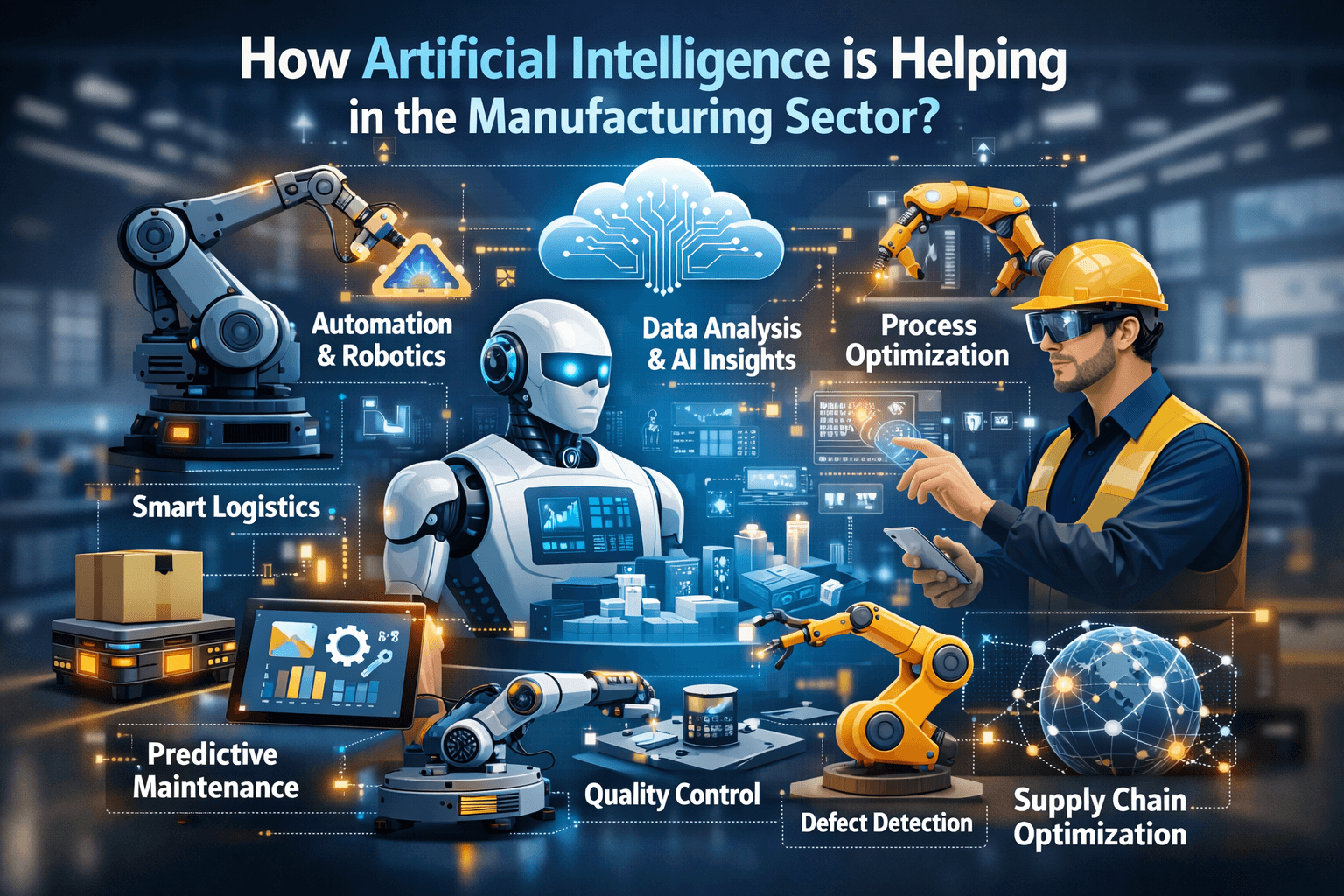
In the modern industrial world, the term Artificial Intelligence is no longer a word, but this has become a practical and everyday tool that is changing how goods are produced. From the food we eat to the cars we drive, AI is working hard to make manufacturing faster, safer as well and more effective.
As industries are growing in 2026, the demand for skilled professionals is also rising. This is why many of the engineers are enrolling in the Artificial Intelligence Online Course in India to understand the modern production system. In this article, we have discussed in detail about this. So let’s begin discussing the meaning of AI in Manufacturing:
What is AI in Manufacturing?
When AI is used in the manufacturing sector, it is used to perform the functions that usually need human intelligence. It is all about things that get found from scratch and predicting the machines might break as well as finding a rapid way to move the parts across the factory.
While humans are great at creative problem-solving, machines equipped with AI are great at processing huge amounts of data without getting tired. In a high-speed factory, an AI can "see" a tiny defect in a microchip in milliseconds, which is like something a human eye may miss after hours of repetitive work.
The Role of Artificial Intelligence in Helping the Manufacturing Sector:
Here, we have discussed the role of Artificial Intelligence in helping the Manufacturing Sector in detail. Well, taking the AI Training in Bangalore can help understand how using AI can improve the manufacturing sector.
1. Predictive Maintenance
One of the most valuable ways AI helps is through Predictive Maintenance. In the past, factories followed two rules for fixing machines:
● Reactive: Fix it when it breaks (which causes expensive delays).
● Preventative: Fix it on a schedule (which might waste money replacing perfectly good parts).
With AI, we use a third way. Sensors are attached to machines to monitor heat, vibration, and sound. The AI analyzes this data in real-time. If a motor starts vibrating slightly differently, and even if this sounds normal to a human, the AI will flag this. It allows the factory to fix the special part during a scheduled break, which prevents a total shutdown.
2. Quality Control and "Computer Vision."
In the year 2026, many of the production lines are looking for high-speed cameras that are powered by computer vision. Well, it is a branch of AI that allows machines to see as well as interpret images.
For example, in a bottling plant, AI cameras scan every single bottle passing by at lightning speed. It checks:
● Is the liquid level exactly right?
● Is the cap screwed on tight?
● Is the label perfectly straight?
If any of the bottles fail in this check, then AI can remove it from the line instantly. It can also ensure that the 100% perfect products reach the customer. This will help in reducing the scrap as well as waste.
3. Generative Design: Creating the Perfect Part
AI isn't just helping on the factory floor; it’s helping in the design studio too. Engineers now use Generative Design software. An engineer tells the AI the goals for a part. For example: "I need a car bracket that is lightweight but can hold 500 kg of weight."
The AI then runs through thousands of design possibilities in minutes, often coming up with different shapes that a human designer can’t imagine. These designs will be stronger and use less material. This makes it cheap as well as more sustainable to produce.
4. Collaborative Robots (Cobots)
CoBots are built in such a way that they can work right with the people. AI lets these robots be aware of their surroundings. When a human worker accidentally comes into the path and block the way, the AI can detect this and slow down the robot activities. Such a partnership is great for handling the complex as well as delicate tasks.
The Need for Skill Development in India:
As these technologies are becoming standard, the job market is also changing. Well, Companies are no longer just looking for workers, as they are also looking for AI-enabled technicians. Taking the AI Course in Noida can help understand how these systems are developed and tested. Also, this course in Noida will offer the specific knowledge that is required to manage the automated warehouses and high-tech assembly lines. The goal of these educational programs is to fill the gap between traditional engineering and modern data science.
Benefits of AI In Manufacturing:
· Zero Waste Inventory: Companies avoid overstocking and "stockouts." According to recent data, this reduces forecasting errors by up to 50% and cuts product unavailability by 65%, ensuring the right product is always on the shelf.
· Resilient Production: It ensures raw materials arrive "just in time." This drastically reduces logistics costs by 15-20% and prevents expensive factory shutdowns caused by missing parts or delayed deliveries.
· Sustainable Profits: It can help lower the factory’s carbon footprint and cut energy bills by up to 25%. This helps companies meet 2026 green energy regulations while increasing their bottom line.
Conclusion:
The biggest misunderstanding about AI in manufacturing is that it will replace human beings. In reality, it is removing the repetitive tasks, and humans can focus on the strategy, maintenance, and innovation. The future of manufacturing is a place where humans use their brains and machines use their speed. So taking the AI course can help improve your skills and stay relevant in the age of smart world.